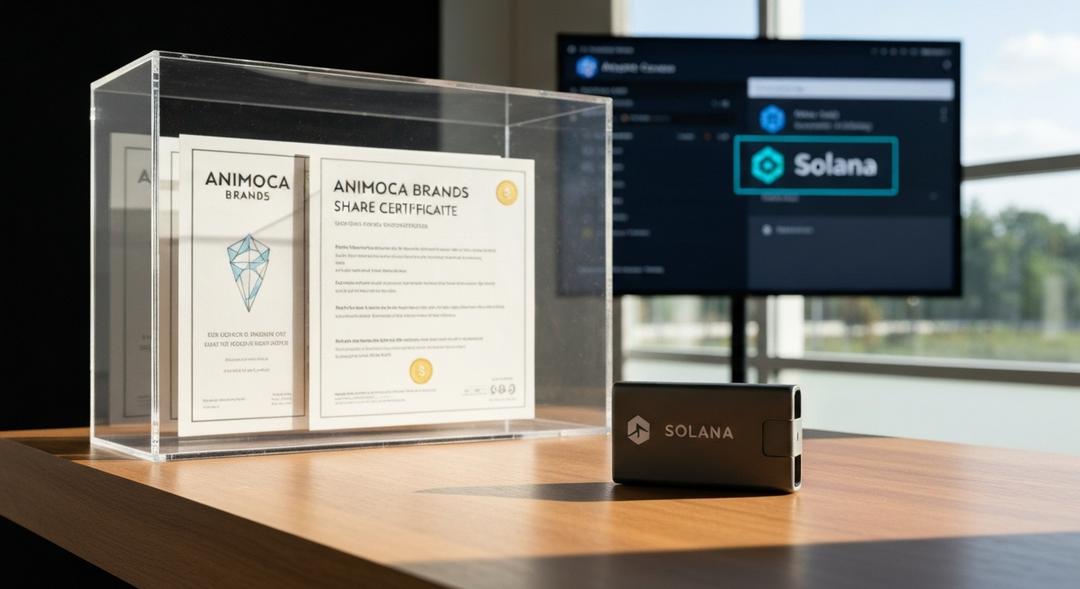
Republic’s latest initiative targets broader access to private tech investment. The company has announced it will tokenize shares of Animoca Brands using Solana’s blockchain.
By moving to tokenize Animoca Brands’ equity, Republic aims to lower the barriers that have long limited access to private firms. Traditionally, shares of Animoca Brands — a leader in the digital assets arena and supporter of more than 600 blockchain startups — have only been available through select, over-the-counter transactions.
These new digital tokens will serve as a representation of real ownership stakes in Animoca Brands. Once created, these tokens can be securely stored in crypto wallets and exchanged on a specialized marketplace managed by Republic.
Yat Siu, Animoca Brands’ executive chairman and co-founder, highlighted the forward-thinking nature of the plan. He emphasized that bringing Animoca’s equity into a digital, tokenized format fits the firm’s commitment to pioneering Web3 innovation.
With this new pathway, investors globally could soon gain exposure to Animoca Brands without waiting for a classic public market debut. Tokenization as an approach has gained momentum because it can increase liquidity and allow more participants to invest in assets that were once reserved for insiders or institutional players.
For many investors, the appeal comes from potentially trading these tokens more flexibly. Instead of navigating slow legacy systems, they could access, buy and sell assets like equity with greater ease.
Yet, regulatory clarity remains essential when it comes to tokenizing traditional financial assets. Other companies that have launched similar offerings have sometimes faced questions about legal frameworks and what rights token holders actually possess.
Republic addressed these concerns by explicitly stating that their Animoca equity token will adhere to all current regulations. More details, including token launch dates and specific pricing, will be shared in future updates.
Industry observers see this as a possible inflection point for private equity and digital markets. By using Solana’s cost-effective and rapid transaction capabilities, Republic could set a new template for how firms let retail investors participate in early stage opportunities.
Lily Liu, president of the Solana Foundation, commented that the move signals an important step toward a more inclusive financial landscape. She stressed how projects like this may let individuals invest directly in companies that, until now, were largely out of reach for non-accredited investors or those outside specific regions.
Solana’s blockchain technology is at the center of this push for broader access. Its infrastructure is designed to handle large volumes of transactions efficiently, supporting real-time trading, ironclad security and global reach. That foundation may be critical for seamless trading of tokenized equity.
These bold advances also intersect with developments in related fields. As interest in blockchain-based solutions continues to swell, individuals are searching for ways to diversify their portfolios and make technology work in their favor. Many are actively seeking platforms where they can Start Cloud Mining and explore further gateways into blockchain-powered finance.
The trend toward tokenizing private assets goes well beyond this particular deal. Financial industry players increasingly view tokenization as a vehicle to unlock investments that were once the exclusive domain of institutions or large-scale backers. The combination of regulatory compliance, user-friendly trading and unprecedented access could reshape how people invest.
Despite the promise, there is still debate about shareholder rights and the actual voting power these digital tokens convey. Industry insiders will be keenly watching how Republic navigates the interplay of innovation, access and legal safeguards.
Market participants continue to push for greater involvement in alternative assets, seeking direct exposure to high-growth technology firms before they reach public markets. This hunger for opportunity aligns with Republic’s bet that well-executed blockchain adoption can deliver on the ideals of transparency, speed and equal participation.
Tokenization of equity is not the only trend keeping industry watchers on their toes. As exchanges and marketplaces become more sophisticated, security innovations and smarter contracts are building confidence among newcomers and experienced investors alike.
Analysts expect that, should Republic’s tokenized equity venture prove successful, similar offerings may quickly follow for other private companies. This could foster healthy competition among platforms and set new standards for investor engagement and capital formation.
What makes the Animoca Brands move particularly notable is the intersection of reputable names and state of the art blockchain infrastructure. Both new investors and established market participants are paying attention to how the process unfolds and whether it truly brings inclusion beyond just headline promises.
Conclusion
Republic’s decision to tokenize Animoca Brands’ equity on the Solana platform represents a pivotal moment in blockchain finance. It may signal a broader shift where direct, global participation in private technology investment becomes the rule rather than the exception.
As the launch details are finalized and more regulatory guidance is issued, this experiment could set important precedents. The outcome could redefine expectations for access, transparency and investor opportunity in both the crypto and financial sectors.

Ewan’s fascination with cryptocurrency started through his curiosity about innovative technologies reshaping the financial world. Over the past four years, he has specialized in cloud mining and crypto asset management, diving deep into mining contracts, profitability analysis, and emerging trends. Ewan is dedicated to helping readers understand the technical and economic aspects of crypto mining, making complex information accessible and actionable.