
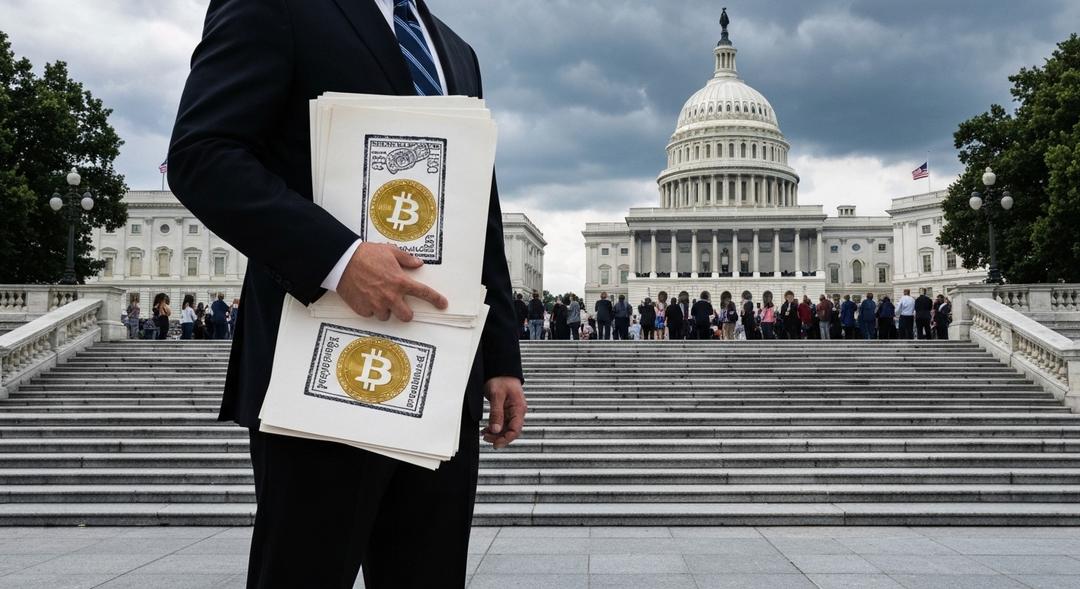
Pressure is mounting in Congress as financial reforms hover near approval. Tensions have erupted between cryptocurrency innovators and established banking interests across Washington.
Market participants and lawmakers have watched anxiously. Powerful banking organizations have reportedly joined forces with smaller regional banks to challenge the influence of digital asset companies. This conflict is unfolding just as a highly anticipated crypto market structure bill approaches a critical Congressional vote.
Crypto policy has long been controversial on Capitol Hill. The current legislative push represents the industry’s best shot at securing a regulatory framework after years of hurdles. Digital asset advocates had rallied bipartisan support, believing this effort might finally bring clarity to how these assets are regulated.
Yet as the vote neared, hints of coordinated resistance surfaced. Banking lobbyists appear to have amplified their arguments at key moments, swaying lawmakers who otherwise supported more open financial experimentation.
The resulting standoff has opened new rifts inside Congress. Without agreement on terms that accommodate both traditional financiers and digital-first upstarts, the bill could stall at the finish line. This reflects long-standing unease about the competitive threat that new technology poses to established services.
Many regional and community banks say they want a fair playing field. Their leaders warn that sudden legislative changes could erode stability and consumer safety if newer entrants are allowed unfettered market access. Crypto firms, in turn, argue that entrenched middlemen are simply trying to preserve outdated business models by stifling legitimate innovation.
Economic stakes continue to climb as global financial centers move rapidly to embrace blockchain and digital currencies. The US risks falling behind if its regulatory environment lags behind rivals in Asia and Europe. Some lawmakers fear that overcaution could concede global leadership, weakening American competitiveness in a critical sector.
Behind closed doors, negotiations have been tense and personal. Some members of Congress have accused industry voices of operating behind the scenes, recruiting trade groups and academics to publish reports aimed at swaying undecided legislators.
Backers of the market structure bill are frustrated that the debate seems to have become about choosing sides. They insist that modernization need not be a zero-sum game between banks and new financial networks.
Amid increasing political rhetoric, seasoned policy veterans recall the history of banking legislation. Changes to the structure of financial markets have always been hard-won, with disruptions usually met by loud pushback from those with the most to lose.
As the drama has spilled into the public sphere, the crypto community has mobilized grassroots campaigns. Teams have targeted lawmakers with calls urging them to update regulations. Opponents have countered by reminding voters of past scandals that cost investors money, urging caution and strong consumer protections instead.
Lobbying expenditures have soared over recent months, reflecting the high stakes. Reports indicate that both banking and crypto interests have spent record sums to influence the trajectory and language of the market structure bill.
In the thick of this power struggle, new businesses and individual users struggle to make sense of shifting risks. Many are concerned that congressional gridlock will slow the United States’ transition to a modern financial infrastructure.
The uncertainty has affected not only tech entrepreneurs and startups, but also retail investors looking for new growth opportunities. Services promising users the chance to Start Cloud Mining through simple web platforms have grown in popularity, introducing millions of Americans to digital asset investing. Regulatory ambiguities cast doubt on whether these innovations can continue to flourish.
Insiders warn that financial technology must continuously evolve to stay relevant. If Congress is unable to reconcile the interests of banks and digital asset providers, innovation could move offshore, costing the country valuable talent and business.
The latest bill was crafted to balance innovation with stability. Lawmakers designed provisions aimed at ensuring transparency, investor safety, and accountability for all market participants, regardless of their origins or size.
Some moderates hope a last-minute compromise might bridge the gulf between banks and crypto advocates. They suggest that with proper safeguards, both established institutions and new companies can operate and expand without compromising market order.
As the session draws to a close, every vote will carry enormous implications for the trajectory of financial services in the United States. No matter the outcome, the process has revealed deep currents of mistrust and rivalry that could shape policy debate for years to come.
Conclusion
The fight over the crypto market structure bill reflects far more than a single policy disagreement. It highlights broad uncertainty about how best to foster innovation while maintaining stability in a changing financial landscape.
Finding consensus among competing interests will set an example for future regulatory efforts. The outcome will determine whether the United States champions creative energy or retreats into dated models that struggle to meet modern demands.

Ewan’s fascination with cryptocurrency started through his curiosity about innovative technologies reshaping the financial world. Over the past four years, he has specialized in cloud mining and crypto asset management, diving deep into mining contracts, profitability analysis, and emerging trends. Ewan is dedicated to helping readers understand the technical and economic aspects of crypto mining, making complex information accessible and actionable.