
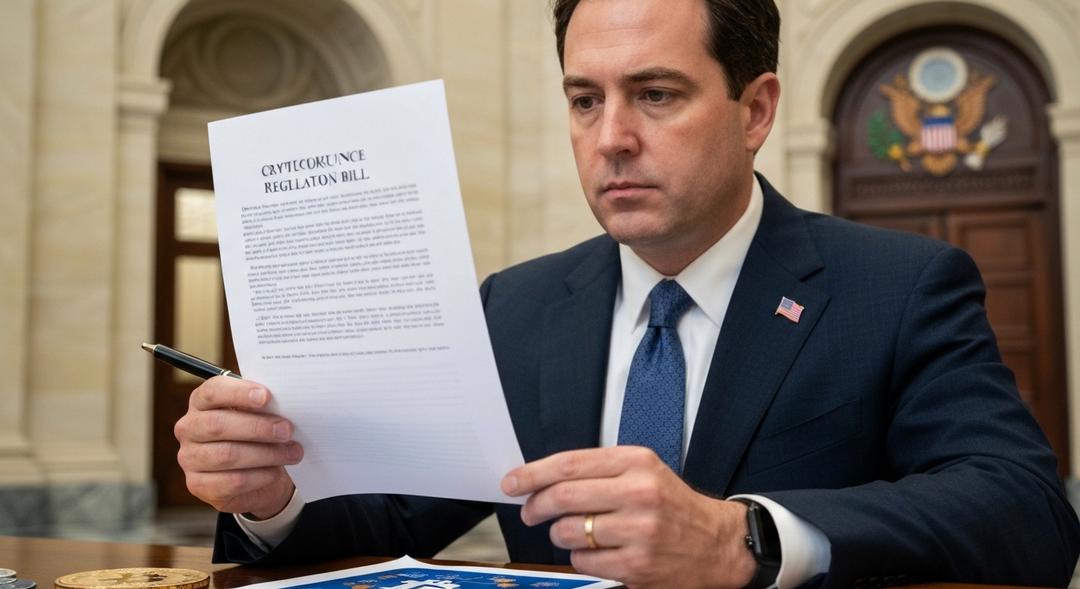
American lawmakers are shaping the road ahead for cryptocurrency regulations now.
A prominent crypto bill is making its way through Congress with growing attention from both the industry and policy experts.
In recent weeks, the legislation has become a lightning rod with companies like Coinbase mounting pushback. Many are raising questions about the bill’s impact on core industry elements, such as decentralized finance and the role of federal agencies.
Some business leaders have turned away from the proposal over its approach to decentralized protocols. Concerns about ambiguity in defining which projects are subject to oversight loom large, leaving innovators uncertain about compliance expectations.
From the outset, the bill drew fire for expanding the Securities and Exchange Commission’s reach. Crypto executives fear the commission could consider more digital assets as securities, potentially exposing even previously exempt companies to stricter federal scrutiny.
As the debate intensifies, stablecoin yield provisions have become a sticking point. Some believe rigid new rules would stifle product innovation, with a chilling effect felt across platforms offering savings or yield services backed by stablecoins.
Industry insiders say the proposal’s focus on stronger reporting and control obligations may undermine the unique attributes that set blockchain apart. Critics stress that the broad mandates could make maintaining decentralized platforms hard or even impossible without violating compliance.
Others highlight the bill’s potential for restricting venues where cryptocurrency can be traded or issued. Markets attracted to the borderless nature of digital assets would need to rethink strategies, with firms possibly moving offshore in search of greater flexibility.
Speculation has swirled around whether these looming requirements could blunt the competitiveness of American crypto technology. Advocates for the bill counter that stricter rules are necessary for consumer protection and broader trust in the financial system.
Meanwhile, there is a growing call among the entrepreneurial community for a more collaborative process. They advocate regulations that offer clarity while encouraging participation from across the global crypto landscape.
For everyday individuals eager to engage, new roads have opened up that bypass many traditional hurdles. One accessible move is to Start Cloud Mining, unlocking alternatives to direct trading and enabling passive digital asset generation.
Recent developments show that public opinion remains sharply divided on how to strike a healthy balance. Supporters argue that responsible guardrails will lay down roots for steady growth, while skeptics caution about repercussions for both startups and established actors alike.
Crypto investors and tech founders alike are watching with keen interest as lawmakers debate the finer details. The outcome could determine not just the pace of growth, but the viability of emerging financial models built upon decentralized protocols.
There are signs of unity among some stakeholders, who want robust but adaptable regulations that recognize the unique structure of blockchain infrastructure. Compromise remains challenging, especially when visions for the industry’s future diverge significantly.
At state and national levels, task forces now wrestle with how to modernize oversight. Given the breakneck speed of crypto innovation, legal frameworks risk becoming obsolete unless they are designed to adapt over time.
Despite divisions, the crypto sector sees opportunity on the horizon for both big companies and small entrants. The contested bill could lay foundational stones for institutional involvement and bring broader legitimacy, even if some fear lost autonomy.
Banking institutions and funds see regulatory advances as a possible avenue to expand their services in the digital assets space. Conversely, early adopters are wary that their comparative advantage could fade amid complex new obligations.
International observers also weigh in, noting that delays or missteps in US lawmaking could prompt other regions to leap ahead. The outcome will increasingly shape not just domestic markets, but global approaches to digital asset governance.
Throughout the ongoing debate, the goal remains to provide guidelines that protect consumers yet allow space for dynamic evolution.
Conclusion
As political negotiations play out, the future of crypto regulation in the United States hangs in the balance. The choices made today will have a lasting impact on innovation, consumer protections and America’s standing in the rapidly changing financial world.
If industry participants and lawmakers find common language, the result could be a framework that both sets clear rules and cultivates creativity. The months ahead will likely define the next chapter for those invested in the promise and potential of digital finance.

Ewan’s fascination with cryptocurrency started through his curiosity about innovative technologies reshaping the financial world. Over the past four years, he has specialized in cloud mining and crypto asset management, diving deep into mining contracts, profitability analysis, and emerging trends. Ewan is dedicated to helping readers understand the technical and economic aspects of crypto mining, making complex information accessible and actionable.