
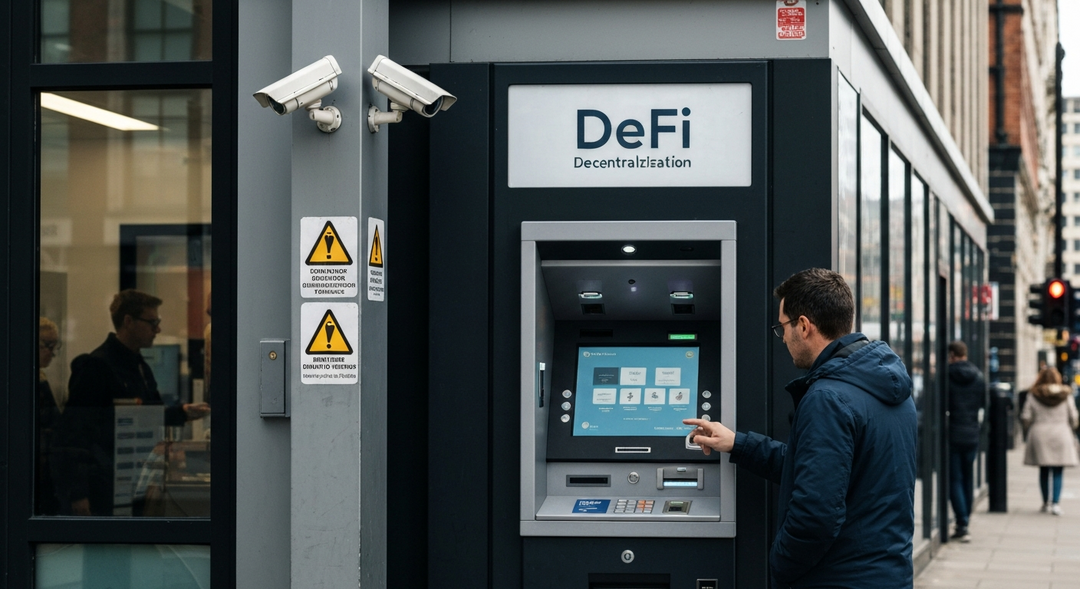
Most believe DeFi promises true independence in financial systems today. Yet the reality shows a far more complex and nuanced design.
DeFi, or decentralized finance, is promoted as a technology that removes middlemen and hands control back to users. These systems rely on openly accessible smart contracts and protocols. At first glance, this seems to eliminate points of failure and centralized oversight.
Yet when examining the architecture of leading DeFi platforms, another picture emerges. Teams of creators, developers, and organizations often maintain the code, set parameters, and make big decisions. So-called decentralized autonomous organizations may govern some processes, but their votes concentrate among a handful of large token holders.
Community voting, one of DeFi’s biggest principles, often gives significant influence to original developers and early investors. These groups might control the outcome of proposals or upgrades. It turns the dream of community control into the reality of centralized stewardship.
Builders behind major DeFi protocols continuously monitor systems to fix bugs or respond to threats. When vulnerabilities arise, leaders can halt trading or freeze assets to protect users. These safeguards highlight a layer of necessary oversight, even if it sometimes contradicts the vision of pure decentralization.
Onboarding new users to DeFi also requires customer support, guidance, and education. These services are provided by defined teams or companies acting as anchors in the user experience. Rather than a true peer-to-peer universe, many workflows bring back the familiar images of centralized help desks.
Behind the technical interfaces, stablecoins and cross-platform bridges are critical pieces keeping DeFi apps reliable and connected. These essential parts are frequently issued and managed by specific organizations with the capacity to audit, defend, and upgrade them.
In addition, important security audits and protocol upgrades demand skilled professionals to run tests and approve changes. Investors and users trust that some authority will ensure the software’s safety, again showing the subtle presence of organization and oversight.
Even the core process that allows people to Start Cloud Mining comes with certain centralized features. Whether it’s the maintenance of mining pools, the management of payouts, or the platform’s technical updates, experienced hands guide every major step. This is true even though the service aims to democratize access for everyone involved.
Growth in DeFi calls for adaptation to regulatory requirements and ongoing mechanisms for risk management. Compliance teams must navigate global laws, protect user data, and defend platforms against nefarious actors. Oversight protects funds while fostering confidence in otherwise open ecosystems.
When upgrades or crises happen, leadership teams act fast to steer developments and manage communications. This means rapid responses, decisive actions, and a coordinated approach, elements seen in traditional centralized organizations everywhere.
While decentralization remains the stated end goal, immature protocols benefit from structured decision making and guidance. Without it, innovation would stall, vulnerabilities could multiply, and public trust might quickly fade away.
The Balance Between Innovation and Security
For DeFi to flourish sustainably, layers of oversight seem almost inevitable along the journey. Self-governance and progressive decentralization allow platforms to balance stability and open innovation.
An often understated truth is that central teams form the safety net for millions of dollars held on-chain. Although this may shift over time, many users embrace this compromise, hoping security today will pave the way for fuller decentralization tomorrow.
Early adopters see value in gradual handovers of power, preferring healthy transitions rather than abrupt abandonments of responsibility. In the meantime, developers and organizations continue to hold much of the influence and risk of any given platform.
Ultimately, the story of DeFi is one of evolution. The current blend of central coordination and community input is shaping tomorrow’s more universally accessible financial landscape.
Conclusion
DeFi still carries the excitement of rewriting the rules for finance. But the machinery under the surface often mirrors the same centralized controls it promises to escape.
Real progress relies on carefully guided transformation, where incremental decentralization walks hand-in-hand with practical safeguards. Trust will continue to depend on the teams, structures, and organizations behind every codebase until new solutions emerge.

Ewan’s fascination with cryptocurrency started through his curiosity about innovative technologies reshaping the financial world. Over the past four years, he has specialized in cloud mining and crypto asset management, diving deep into mining contracts, profitability analysis, and emerging trends. Ewan is dedicated to helping readers understand the technical and economic aspects of crypto mining, making complex information accessible and actionable.