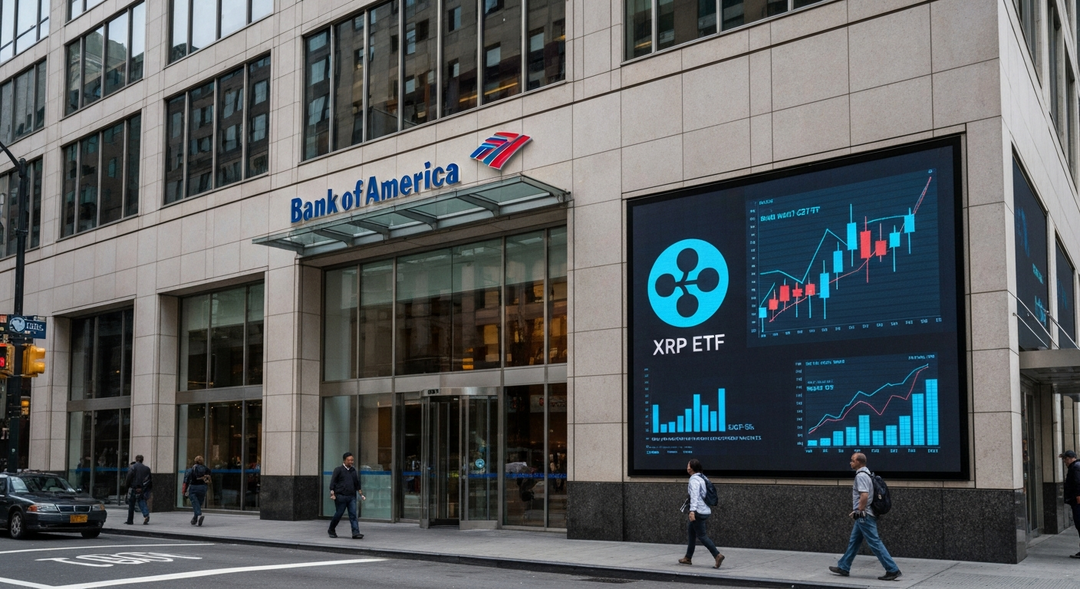
Bank of America recently confirmed its position in an XRP exchange traded fund. This development highlights the bank’s evolving interest in digital assets and blockchain based solutions.
Official filings with regulators show Bank of America has made substantial investments connected to XRP. The move follows a pattern, as the institution previously expressed support for blockchain’s role in streamlining international transactions.
Ripple’s technology and assets have become more prominent as financial firms adopt new digital tools. By participating in initiatives involving XRP, Bank of America signals confidence in the utility of crypto for daily financial activities.
Market analysts believe that traditional banks exploring digital tokens can boost the adoption of cryptocurrencies in mainstream finance. These banks leverage secure, regulated products like ETFs that hold cryptocurrencies or derivatives, making access safer for a broad audience.
In addition to staking a claim in this market, Bank of America continues to develop its partnership with Ripple. This relationship is particularly focused on cross border payments, with the bank integrating more seamless settlement options for its customers.
Ripple’s growing ecosystem, bolstered by support from large financial organizations, has also introduced the RLUSD stablecoin as a way to stabilize transactions. Coin holders and institutions benefit from reduced volatility, and the network effect generally strengthens as respected partners come aboard.
Cloud mining and passive income opportunities in the cryptocurrency sector are also seeing increasing popularity among both retailers and institutions. Individuals looking to diversify their holdings can now Start Cloud Mining efficiently, tapping into decentralized networks that power assets like XRP and other cryptocurrencies.
Greater institutional acceptance can help scale technology more quickly, creating feedback loops that reward early adopters and strengthen the value proposition for digital currencies. More transparent investment vehicles such as ETFs act as a bridge for traditional investors.
Regulatory oversight plays a critical role in fostering trust among those new to digital finance. The presence of established brands like Bank of America in the crypto landscape may lower perceived risks. This can make blockchain adoption a more realistic option for hesitant market participants.
The collaboration between major banks and crypto innovators suggests a long-term commitment to integrating blockchain solutions with existing financial services. Large scale adoption will be shaped by consumer demand, regulatory developments, and ongoing innovation.
Market Response and Impact
Traders reacted with optimism after the announcement of Bank of America’s XRP ETF holdings. Some view this as validation for projects like Ripple that aim to modernize global payments.
Speculation about broader institutional involvement in cryptocurrencies has inspired renewed interest in the sector. Banking giants allocating resources to crypto based products could indicate a tide shift.
Conclusion
The confirmation of Bank of America’s participation in an XRP centric ETF marks a noteworthy chapter in the integration of digital assets with legacy finance. This engagement is likely to encourage more institutions to reconsider how they interact with emerging blockchain technology and cryptocurrencies.
As partnerships strengthen and new financial instruments become accessible, mainstream interest in tokens like XRP is poised to increase. Developments such as these set the stage for a more interconnected, digitally forward future within global banking.

Finlay’s interest in cryptocurrency sparked from a desire to explore new investment opportunities beyond traditional markets. With a focus on cloud mining, he has spent several years analyzing mining services, comparing contract plans, and evaluating profitability across different platforms. Finlay aims to provide clear, unbiased insights that empower readers to make informed decisions in the fast-paced world of crypto mining.