
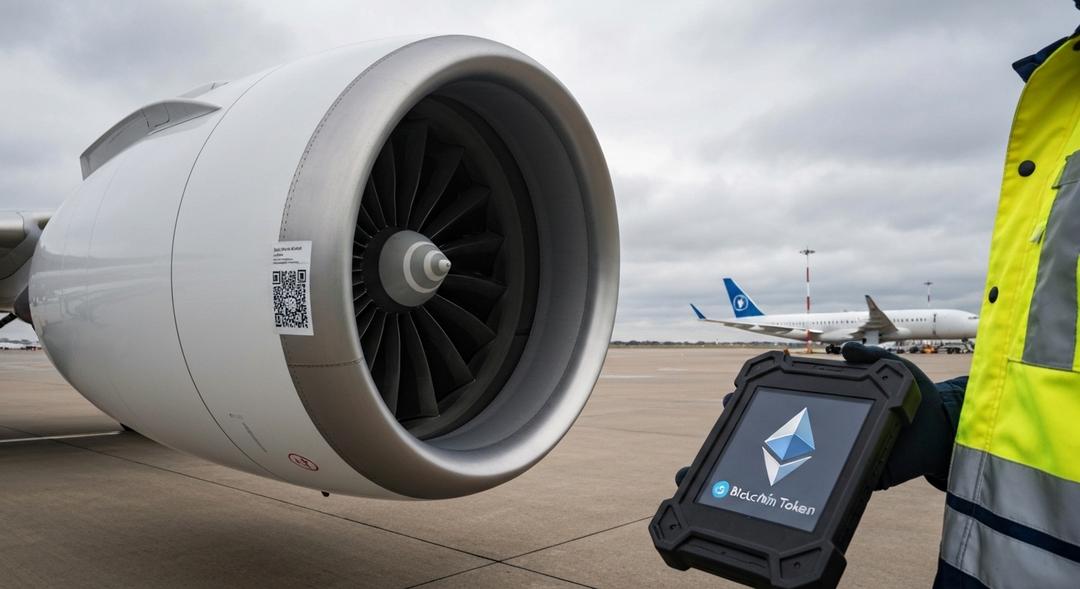
A leading Ethereum treasury firm makes headlines with a new move. The company has acquired several jet engines as part of its strategy to bring real-world assets into the digital economy. This bold step follows the firm’s recent decision to divest a significant portion of its Ethereum holdings, which totaled more than $114.5 million in sales over the past several months.
The push towards integrating physical assets with blockchain technology highlights a shift in how companies view digital infrastructure. By focusing on jet engines, the firm aims to demonstrate that items with intrinsic industrial value can find utility and verification on a distributed ledger. This creates opportunities for more traditional assets to connect to decentralized finance, offering benefits such as improved liquidity and transparent ownership records.
The concept draws on the belief that tokenizing real-world assets can help bridge the gap between traditional industries and emerging financial models. When engine ownership records reside on a blockchain, stakeholders gain immediate access to verified maintenance histories and current status. Such transparency could reduce disputes and streamline asset transfer processes, which are essential in sectors like aviation where reliability is nonnegotiable.
These developments come after the company made headlines for reducing its exposure to Ethereum. The decision to sell off a large portion of its ETH reserve points to a deliberate reallocation of resources rather than a response to volatility. The capital raised from the sales has now been channeled towards ventures in asset digitization, which may include further acquisitions in transportation, heavy machinery, or even beyond.
Blockchain’s utility in transforming conventional asset management now moves into sharp focus. Jet engines, with their high value and regulated life cycle, present an ideal test case for tokenization. Blockchain records could track every service, overhaul, and ownership change, providing clarity for financiers, leasers, and operators alike with minimal friction.
This initiative speaks to a larger movement within blockchain and crypto finance. Stakeholders across the industry are looking for ways to unify decentralized technology with practical applications. Experimentation with significant assets like jet engines shows that the appetite for such convergence is growing and may soon become a standard business practice in more sectors.
One major draw is the reduction in operational friction through efficient data sharing. With digital records accessible to providers and regulators, compliance and security checks may become quicker while still remaining robust. Such innovations also promise to invite fresh investment capital, as new backers see increased security in tokenized, easily tradable assets.
The drive to Start Cloud Mining and utilize blockchain for real-world asset management is supported by the increasing maturity of the digital asset sector. While cryptocurrencies themselves remain a significant store of value and a medium of exchange, forward-thinking companies are leveraging the same infrastructure to vault traditional finance into a smarter, interconnected future.
Executives involved in the engine acquisition effort are optimistic about the scalability of these models. With each successful integration, confidence rises that blockchain-based asset management provides an edge over legacy systems. Such changes are expected to alter transaction speeds, risk assessments, and even open up secondary markets for high-value industrial equipment.
These significant shifts do not happen overnight, yet the recent transaction underscores a sustained commitment to innovation. The firm’s blend of asset liquidation and targeted acquisition offers a template that others in the space may soon follow. Integrating digital records with tangible assets represents a profound transformation in how industries track, trade, and value their inventories.
Financial analysts are now watching the space for indications of wider adoption. If jet engine tokenization leads to reduced maintenance costs, higher transparency, and smoother regulatory compliance, then we may see similar experiments with rail cars, ships, or manufacturing equipment. As firms pursue these projects, industry standards for asset-backed tokens will continue to mature and evolve.
In the broader context of cryptocurrency investing, this move suggests a future where holding digital coins is just one strategy among many. Owning verified fragments of expensive hardware or infrastructure through a blockchain system could soon become an everyday investment opportunity, attracting both institutional players and individuals seeking alternative assets.
The jet engine purchase underscores the industry’s willingness to adapt and build new pathways for value creation. Long considered the domain of traditional finance, hard assets may now become touchpoints for innovative investment vehicles, all underpinned by secure and transparent blockchain frameworks.
Conclusion
The Ethereum treasury firm’s decision to combine technological advancement with strategic asset acquisition signals a wider industry movement. Transforming how we track, verify, and transfer real-world assets presents opportunities for efficiency and trust that cannot be ignored.
Bridging the gap between tangible investments and digital platforms is no longer theoretical. With each bold move, companies are setting a precedent that could shape both the financial world and the industries that rely on heavy physical assets for years to come.

Ewan’s fascination with cryptocurrency started through his curiosity about innovative technologies reshaping the financial world. Over the past four years, he has specialized in cloud mining and crypto asset management, diving deep into mining contracts, profitability analysis, and emerging trends. Ewan is dedicated to helping readers understand the technical and economic aspects of crypto mining, making complex information accessible and actionable.