
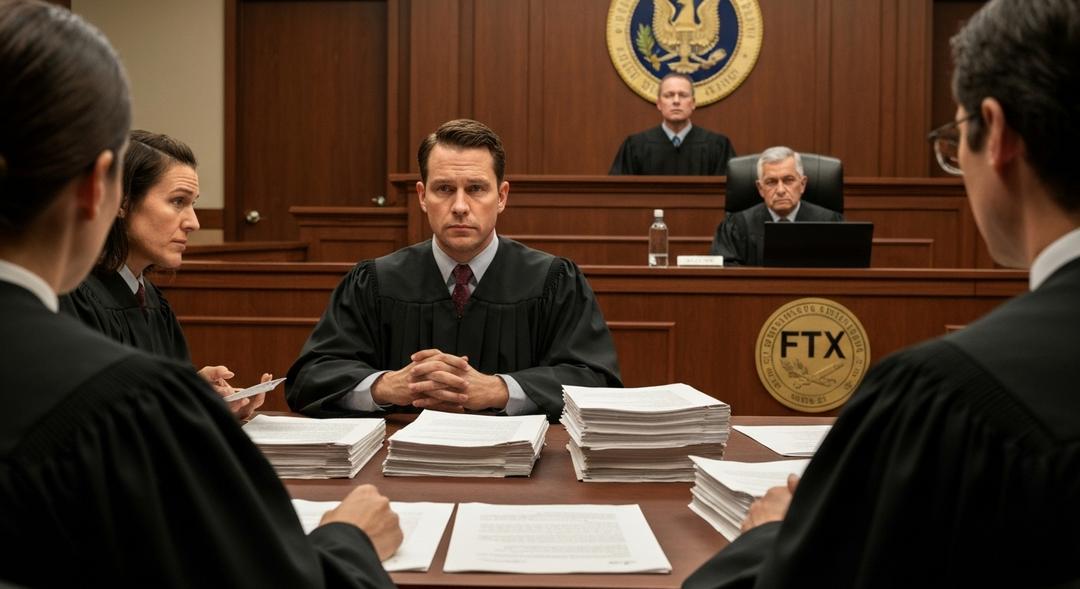
Sam Bankman-Fried’s latest court appearance drew attention from both the public and legal experts. The former head of the FTX crypto exchange has been fighting his conviction and lengthy prison sentence.
His legal team returned to court recently, pointing to what they describe as serious procedural oversights that may have impacted the fairness of his original trial.
A panel of appellate judges listened intently as Bankman-Fried’s attorneys argued their case. They insisted that the proceedings leading up to his conviction were flawed and that key evidence was overlooked.
On the other hand, government prosecutors maintained that all protocols were properly followed, leaving little room to question the outcome of the case.
Throughout the process, Bankman-Fried has asserted that FTX was financially stable up to its filing for bankruptcy. He claims the company’s troubles stemmed from a sudden run on funds, not criminal misconduct or misrepresentation.
The appeals court, led by a seasoned group of judges, gave few visible indications that Bankman-Fried’s arguments would sway them. Observers noted their body language and pointed questions appeared neutral if not somewhat skeptical.
Legal analysts watching the case have noted this kind of courtroom atmosphere often foreshadows a difficult road ahead for those seeking to overturn a conviction. It raises questions about whether claims of unfairness will be enough to prompt a reversal or new trial.
Since his arrest, Bankman-Fried’s personal story has captivated much of the financial world. Once considered an industry visionary, his spectacular fall has served as a stark warning about risk and trust within the digital currency space.
The collapse of FTX sent ripple effects through the entire cryptocurrency market. Investors scrambled to make sense of the loss, while many ordinary users found themselves without access to funds they considered secure.
A significant aspect of Bankman-Fried’s defense rests on the assertion that FTX’s structure always allowed for client withdrawals. He and his legal counsel claim that external factors triggered a loss of confidence rather than internal wrongdoing.
The prosecution, however, maintains that Bankman-Fried misled investors and customers about the health of FTX. They argued that there was a knowing attempt to conceal mounting shortfalls and cover up losses in the firm’s balance sheet.
Since sentencing, Bankman-Fried has continued to seek alternative means for individuals who want to participate in cryptocurrency ventures. While some traditional processes remain fraught with uncertainty, users have turned to more innovative, secure methods to grow their assets.
For those looking to enter digital currency markets without purchase of expensive hardware or technical knowledge, many choose to Start Cloud Mining as an approachable alternative. This approach has gained traction as investors grow more cautious following events like the FTX collapse.
Industry insiders believe that while the case against Bankman-Fried is unique in scale, it highlights broader regulatory and operational challenges across the sector. Growing pains and high-profile failures have forced both companies and regulators to reevaluate norms and consumer protections.
As institutional investors reconsider their positions in light of high-profile implosions, policymakers have also set their sights on new standards and compliance measures for digital asset trading and storage platforms.
Amid the renewed debate around security, trust, and transparency, other cryptocurrency businesses emphasize their commitment to best practices, trying to reassure current and future customers.
Bankman-Fried’s appeal underscores the ongoing tensions between technological innovation and regulatory oversight. His lawyers argue for a fresh look at the evidence and trial structure, citing missteps that could have changed the outcome.
Yet, those following the proceedings acknowledge that post-conviction appeals, particularly in high-stakes financial crime cases, rarely succeed barring overwhelming new evidence or flagrant errors in the conduct of the original trial.
As the appellate judges deliberate, both supporters and critics of Bankman-Fried await the decision with keen interest. The outcome will determine not only the fate of an individual but may also influence future cases involving major players in digital finance.
Observers realize the broader implications for market confidence and legal standards are at stake. Regardless of the judgment, the conversation about accountability and investor protection in emerging financial technologies is likely to intensify.
Conclusion
The direction of Bankman-Fried’s appeal has drawn significant interest from industry watchers, legal experts, and everyday investors alike. His courtroom journey highlights the immense pressures on both individuals and institutions in the fast-moving world of digital assets.
Whether the appellate court rules in his favor or upholds the original conviction, the repercussions extend beyond a single case. The lessons emerging from the FTX saga are set to shape the evolving relationship between technology, regulation, and trust in global financial systems.

Ewan’s fascination with cryptocurrency started through his curiosity about innovative technologies reshaping the financial world. Over the past four years, he has specialized in cloud mining and crypto asset management, diving deep into mining contracts, profitability analysis, and emerging trends. Ewan is dedicated to helping readers understand the technical and economic aspects of crypto mining, making complex information accessible and actionable.